Explained: ICMR claims it wants to launch Covaxin by August 15, here’s what you need to know
Aiming to make Covaxin available for public use by August 15, ICMR chief Dr Balram Bhargava in a letter told the medical institutions chosen for the vaccine’s trials to ensure all phases of testing were completed by then.
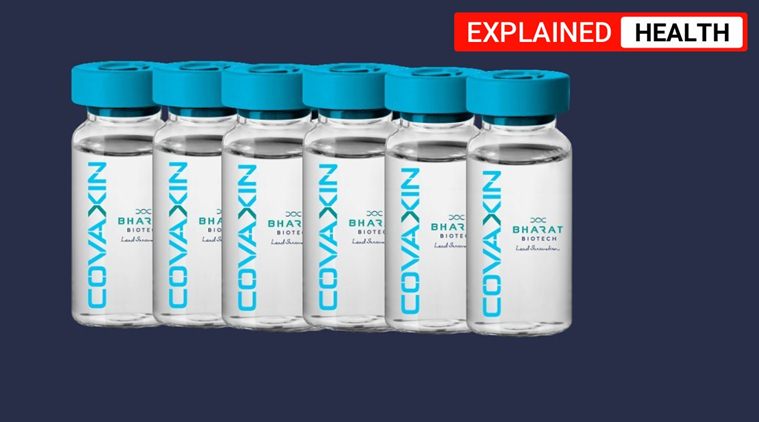
The Indian Council of Medical Research (ICMR) has tied up with Bharat Biotech India (BBIL) to “fast-track” trials of the Hyderabad firm’s Covid-19 vaccine, Covaxin. While ICMR chief Dr Balram Bhargava on July 2 wrote to all the trial sites stating that all of the clinical trials had to be completed by August 15 in time for a “public launch” of the vaccine, bioethics experts are sceptical. They have raised questions over how a vaccine candidate that is yet to even start human trials can crunch all three phases of testing for safety and effectiveness of the vaccine into a timeframe of a month.
Even vaccine candidates like those of AstraZeneca and the University of Oxford, at the most advanced stages of trials globally, do not expect to launch their product before the end of the year.
What is Covaxin?
Covaxin is BBIL’s vaccine candidate to immunise people against Covid-19. The vaccine candidate was developed in collaboration with ICMR’s National Institute of Virology (NIV). NIV isolated a strain of the novel coronavirus from an asymptomatic Covid-19 patient and transferred it to BBIL early in May. The firm then used it to work on developing an “inactivated” vaccine — a vaccine that uses the dead virus — at its high-containment facility in Hyderabad.
“Once the vaccine is injected into a human, it has no potential to infect or replicate, since it is a killed virus. It just serves to the immune system as a dead virus and mounts an antibody response towards the virus,” said the company, adding that inactivated vaccines usually have a proven safety record.
When does ICMR want Covaxin launched?
Aiming to make it available for public use by August 15, ICMR chief Dr Balram Bhargava in a letter told the medical institutions chosen for the vaccine’s trials to ensure all phases of testing were completed by then.
“It is envisaged to launch the vaccine for public health use latest by 15th August 2020 after completion of all clinical trials. BBIL is working expeditiously to meet the target, however, final outcome will depend on the cooperation of all clinical trial sites involved in this project,” stated Bhargaa in the letter dated July 2.
“This is the first indigenous vaccine being developed by lndia and is one of the top priority projects which is being monitored at the topmost level of the Government,” he stated. Any non-compliance would be viewed “seriously”, he added.
📣 Lok Express is now on Twitter - lokexpressnow and Click here to join our instagram (@lokexpress) and stay updated with the latest
What stage of testing is Covaxin at right now?
The Drug Controller General of India, who heads apex drug regulatory body Central Drugs Standard Control Organisation (CDSCO), has given BBIL approvals for phase I and II clinical trials so far.
The company on July 1 registered its vaccine candidate for these two trials. The details of the trials on the Clinical Trial Registry of India shows it plans to test a total of 1,125 people in these trials and plans the first enrollment of subjects for this trial on July 13.
According to the registry, BBIL has estimated the trials to take one year and three months. Of this, phase I trials alone will take at least a month. The firm is expected to submit an interim report from the first phase of the trials to CDSCO after the first 28 days of this trial.
“The ultimate goal is the selection of a safe, well-tolerated, and immunogenic intramuscular vaccine, which will be further evaluated in the phase 2 study,” stated the registry.
Is this possible?
Most experts are sceptical of the possibility of fast-tracking trials to such an extent that all three phases can be concluded within a month and a half.
“I would find it very surprising if it is done. Even the most ambitious companies in the world that are in more advanced stages of development for their Covid-19 vaccines have a longer time-frame,” said Dr Anant Bhan, Researcher, Global Health, Bioethics and Health Policy. “It also sounds unlikely, because the vaccine candidate is only moving to phase I and phase II trials right now.”
Even for an inactivated vaccine, the timeline seems dangerously ambitious, said Dr Bhan.
“To assume that you will be able to get promising data to allow you to go into phase III trials and that you will be done with all trials by August 15 so that you can announce the launch of the vaccine is surprising, coming from ICMR,” he said.
“Even having all the trial results, with safety and efficacy data, by August 15 is difficult. This raises several questions,” he added.
What other Covid-19 vaccines are being tested in India and around the world and what timelines are they looking at for launch?
Currently, there are more than 100 vaccine candidates at different stages of trials across the world.
The AstraZeneca-Oxford vaccine has already progressed to the Phase-III trials stage, and this will, in the best case scenario, only be available towards the end of the year.
Pfizer (in collaboration with Germany’s BioNTech) have already been giving patients its experimental Covid-19 vaccine at low- and mid-level doses. On an recent investor call, Mikael Dolsten, Pfizer’s president of world-wide research and development, said that a Phase 2b/3 study that the company expects to begin this month could finish recruiting patients by late August or early September, and that the company could file for Food and Drug Administration approval in late October. A launch is expected by the end of the year.
On June 30, the United States Food and Drug Administration issued a 24-page guidance document for Covid-19 vaccine developers. While the document doesn’t spell out a timeline, the analyst said its revised guidelines could mean that no vaccine is likely to be made available until next year.
“The FDA seems to suggest that thousands of subjects of safety, and at least six months duration of observation, and clinical efficacy, are all required before any vaccine approval,” wrote SVB Leerink analyst Geoffrey Porges in a July 1 note. “This is not consistent with the many developers who have suggested that they could be on the market by the end of this year.”
In India, apart from BBIL, Zydus Cadila on Friday morning also announced that it had received approval from CDSCO to move from animal testing to human trials. It plans to begin trials this month as well.

.jpeg)
Comments
Post a Comment